New York, New York – February 20, 2026 – Auditchain Labs AG, a provider of AI regulatory disclosure automation infrastructure, today announced the filing of a comment letter with the U.S. Securities and Exchange Commission (SEC) in response to Chairman Paul S. Atkins’ Statement on Reforming Regulation S-K, which invites public comment on modernizing the Commission’s central disclosure requirements for public companies.
The submission is available on the SEC’s website under File Number CLL-15.
This is the third in a series of federal regulatory submissions filed in February by Auditchain. The following are comment letters filed with FDIC and OCC
- FDIC (RIN 3064-AG20, February 9) on payment stablecoin application requirements.
- OCC (Docket ID OCC-2025-0768, February 11) on national bank chartering amendments for digital asset custody operations.
Together, the three submissions present a coordinated framework for structured digital asset disclosure across the major U.S. financial regulatory agencies.
Addressing the “Avalanche” Problem with Structured Data
Chairman Atkins identified that Regulation S-K— the SEC’s central repository of non-financial disclosure requirements since 1982— has grown to elicit “both material and a plethora of indisputably immaterial information.” The comment letter argues that the materiality problem is not solely about what is disclosed, but how.
While financial statements under Regulation S-X have been filed in machine-readable XBRL format since 2009, non-financial disclosures under Regulation S-K remain largely unstructured text in EDGAR filings— making it impossible for investors to efficiently filter, compare, or analyze information at scale.
Key recommendations in the submission include:
- Extending Inline XBRL requirements from Regulation S-X financial statements to key S-K items, including Item 101 (Description of Business), Item 105 (Risk Factors), Item 106 (Cybersecurity), Item 303 (MD&A), and Item 601 (Exhibits).
- Adopting new blockchain infrastructure disclosure requirements for registrants whose operations are materially dependent on public blockchain networks— addressing protocol dependencies, smart contract risks, blockchain network participation by the issuer and affiliates, and concentration risk.
- Ensuring interagency consistency by coordinating SEC taxonomy development with the FDIC and OCC frameworks that Auditchain has proposed, so that entities subject to multiple federal regulators can satisfy disclosure obligations without duplicative, conflicting reporting.
Building the Disclosure Framework for the CLARITY Act
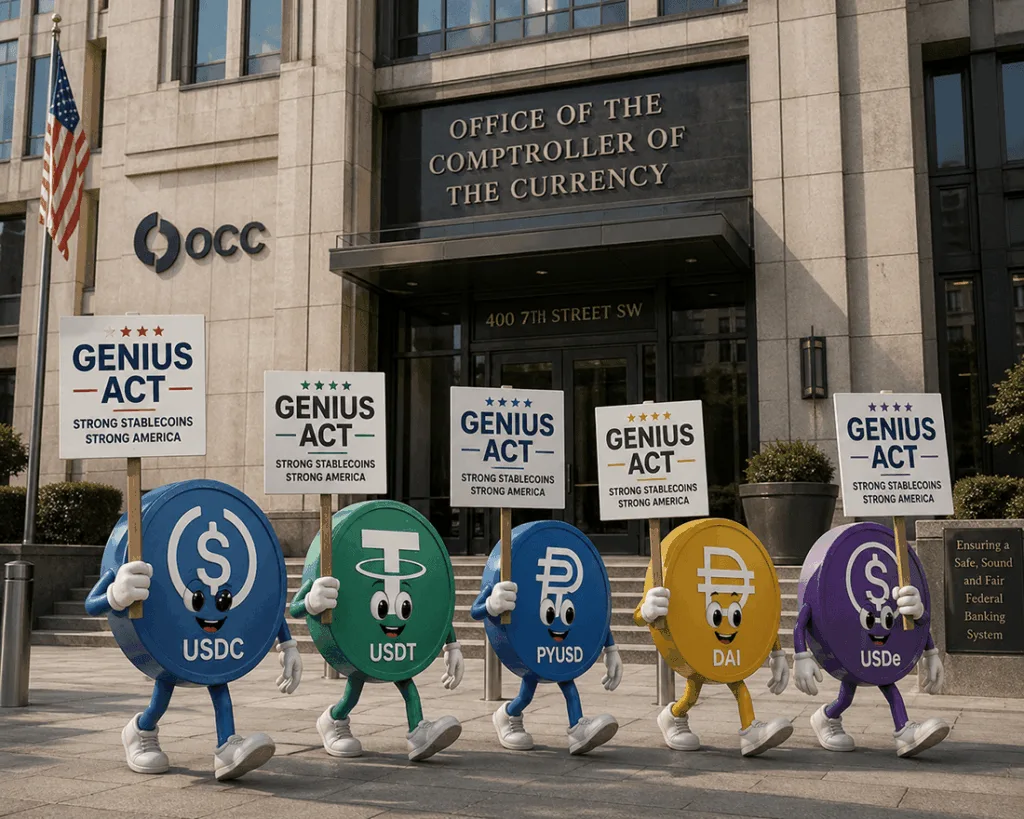
The submission emphasizes that the GENIUS Act, signed into law on July 18, 2025, and the pending CLARITY Act (H.R. 3633), which passed the House with bipartisan support, will create new classes of SEC-registered entities— including issuers of investment contract assets and dual-registered digital commodity exchanges— whose material risks and operational characteristics have no adequate home in the current Regulation S-K framework.
The letter proposes four categories of blockchain infrastructure disclosure drawn from the 136-question disclosure questionnaire and 107-element XBRL taxonomy that Auditchain submitted to the FDIC:
- Blockchain Protocol and Smart Contract Disclosures – protocols utilized, consensus mechanisms, smart contract audit history, and operational continuity plans.
- Blockchain Network Participation by Issuer – validation, mining, and governance activities including network share metrics and financial performance.
- Affiliate Network Participation and Conflicts of Interest – identification of affiliate BNP activities, arm’s length pricing analysis, and transaction ordering conflicts.
- Concentration Risk and Systemic Exposure – aggregated network concentration across the issuer and all affiliates, procyclical risks, and cascading liquidation risks.
Interagency Coordination
The comment letter recommends that the SEC establish or participate in an interagency working group— potentially under the FFIEC Task Force on Reports— to coordinate digital asset disclosure taxonomy development across the SEC, FDIC, OCC, CFTC, and Federal Reserve Board. This builds on a similar recommendation Auditchain made to the OCC in its February 11 submission.
“Regulation S-K reform is the natural place to build the disclosure architecture for the next generation of SEC registrants,” said Jason Meyers, Lead Architect of Auditchain Labs AG. “By combining a principles-based materiality standard with structured data requirements and purpose-built digital asset disclosure categories, the Commission can reduce compliance burdens while improving the quality and accessibility of information available to investors. The sample XBRL taxonomy infrastructure we’ve developed across our FDIC, OCC, and SEC submissions demonstrates that interagency consistency is technically achievable today.”
The SEC’s comment period for Regulation S-K reform is open until April 13, 2026. Comments may be submitted through the SEC’s public comment portal referencing File Number CLL-15.

Filing record: SEC: Comment on Regulation S-K Modernization, filed February 20, 2026.
About Auditchain Labs AG
Auditchain Labs AG is a pioneering force in developing web3 and artificial intelligence-based financial reporting, crypto-asset disclosure, and analysis applications and standards. With a commitment to transparency and accuracy, Auditchain Labs AG aims to revolutionize the landscape of financial and crypto-asset disclosure.
Discord | X | Telegram | LinkedIn | Facebook | Reddit | YouTube

About Pacioli.ai
Pacioli.ai is the world’s first web3 and AI enabled regulatory disclosure automation infrastructure for crypto assets.
Discord | X | Telegram | LinkedIn | YouTube | TikTok | Instagram